Select a powered roller conveyor by matching drive type, roller spacing, and load capacity to your specific material flow. Use this evaluation framework to compare options against throughput, footprint, and maintenance costs before committing to a purchase.
- Match the drive type to your throughput needs, from gear drives for moderate volume to chain drives for high-speed lines.
- Verify load capacity using dynamic calculations, not just static weight, to prevent roller deflection and bearing failure.
- Check roller spacing and diameter against your product dimensions to avoid jams and ensure smooth material movement.
- Budget for maintenance access and spare parts, as accessibility affects long-term operating costs.
How to Define Your Material Movement Requirements
Start with the product. Before evaluating drives or frame materials, document the exact dimensions and weights of every item that will travel through the system. Include packaging variations, pallets, and mixed loads if your line handles multiple SKUs.
Measure the longest and heaviest unit. Add a safety margin for dynamic forces. A box that weighs 10 kilograms static may experience higher forces during acceleration and deceleration. If your line stops and starts frequently, these transient loads increase significantly. Document the acceleration profile. A conveyor that reaches 1.5 meters per second in two seconds creates a different force vector than one that ramps up over ten seconds. Specify the maximum acceleration and deceleration rates in your technical requirements. If the product is fragile, calculate the G-force on the item. Excessive force can damage goods or shift contents inside the packaging.
Map the path. Note turns, elevators, transitions to other conveyor types, and accumulation zones. Material movement is rarely a straight line. Every change in direction or speed creates friction and stress points that affect system design. Mark the transition points on a floor plan. If the line moves from a flat horizontal section to an inclined ramp, the friction coefficient changes. The drive system must compensate for the additional gravitational force. If the line transitions from a powered roller conveyor to a belt conveyor, the transition rollers must match the surface tension and speed of both systems. Mismatched speeds cause product jams and damage to the interface.
Include environmental conditions in this phase. If the facility is cold, the lubricants in the chain drive will thicken. If the area is dusty, the open bearings will clog with abrasive particles. These factors influence the choice of drive type and frame material. A system designed for a dry, warm warehouse may fail quickly in a cold, humid cold storage facility.
Which Drive Type Fits Your Throughput?
The drive mechanism determines how the conveyor rollers rotate. Most powered roller conveyors use one of three approaches: chain drive, sprocket drive, or direct drive motors.
Chain drives are the standard for long lines. They offer a direct connection between the motor and the rollers. You select the chain type based on tension requirements and expected service life. These systems handle moderate to high throughput well. They require regular lubrication and tension checks. A standard roller chain uses rollers, pins, and plates to transmit torque. If the chain is too loose, it will skip a tooth on the sprocket, causing noise and premature wear. If it is too tight, the bearing load increases, shortening the life of the drive motor and the shaft. Inspect the chain for elongation. A chain that has stretched beyond the manufacturer’s limit will need replacement, even if it appears to run smoothly.
Sprocket drives use multiple chains or belts to distribute load across several rollers. This setup suits lines with high loads or where you need redundant drive points. If one drive point fails, the line may still operate at reduced capacity. This redundancy is common in high-speed distribution centers where a single failure would halt the entire operation. The multiple drive points allow the system to continue moving product while maintenance crews repair the failed unit. This design increases the initial cost but reduces the operational risk of a complete line stoppage.
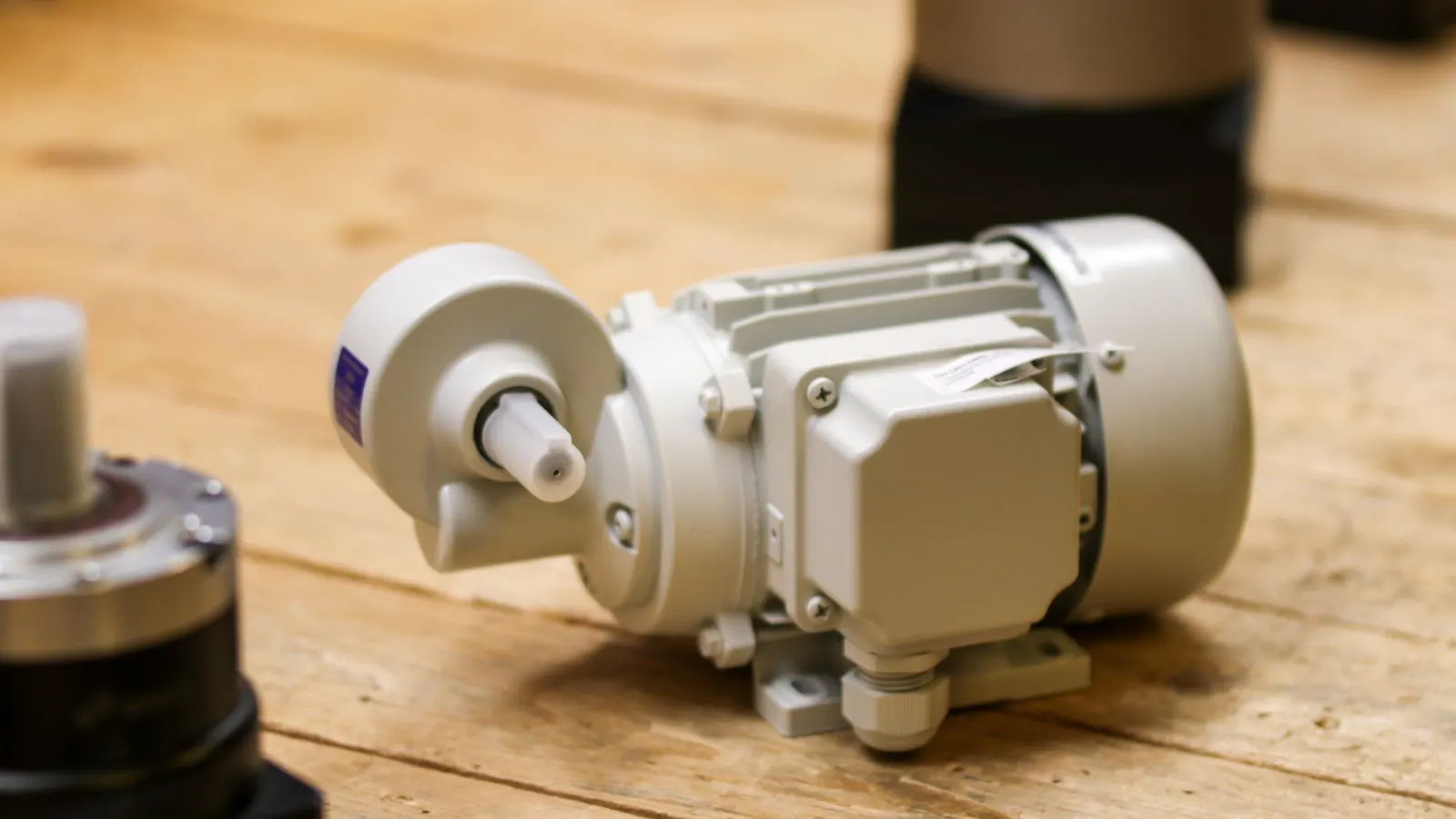
Direct drive motors mount directly to the roller shafts. Each roller has its own small motor. This design eliminates chain wear and simplifies alignment. Maintenance is more complex because you service multiple motors rather than one drive unit. It suits applications where precise control of each roller is needed. In direct drive systems, you can control the speed of individual rollers. This allows for precise accumulation control. For example, if a box needs to be stopped at a specific point, the direct drive motor on that roller can brake while the others continue to feed product. This precision reduces the need for mechanical stops and diverters, which can damage fragile goods.
What Load Capacity Should You Specify?
Do not rely on the static weight of a single item. Calculate the total dynamic load on any single span between supports. This includes the weight of the product, the roller itself, and any accumulated material during stoppage.
Check the bearing rating for your selected roller. Bearings are the first component to fail when load exceeds design limits. Specify the load per bearing, not just per roller. A 50 kilogram roller with a 25 kilogram bearing rating will fail under sustained load. The bearing rating refers to the static load it can support without deformation. Dynamic load includes the forces generated by rotation and impact. When a pallet drops onto the conveyor, the impact force can be several times the static weight. Design the bearing to handle this peak load. If the bearing is undersized, it will crack or deform under the first heavy impact.
Consider the load distribution. A pallet of uniform weight stresses the center bearing. An off-center load stresses the edge bearings. If your products shift during movement, design for the worst-case distribution. For irregularly shaped items, identify the center of gravity. If the center of gravity is not aligned with the center of the roller, the load is uneven. This uneven distribution causes the roller to tilt, leading to increased friction and noise. Use load cell data if available. Weigh the product at multiple points to map the distribution. If you cannot measure the exact distribution, assume the worst-case scenario. Design the system to handle 150 percent of the expected peak load.
How Do Roller Spacing and Diameter Affect Performance?
Roller spacing determines how well small or irregular items stay on the line. If rollers are too far apart, small items can fall through gaps. If they are too close, the system becomes stiff and harder to drive.
A common starting point is one roller every 600 to 900 millimeters for general material movement. For small items, reduce spacing to 300 to 600 millimeters. For large, stable items like pallets, increase spacing to 1,200 millimeters or more. The gap width is the critical factor. If the gap is wider than the smallest dimension of the product, the item will fall. Measure the smallest product width. The gap must be at least 10 percent smaller than this dimension. For example, if the smallest box is 120 millimeters wide, the gap should be no more than 108 millimeters.
Roller diameter affects acceleration and speed. Larger rollers require more torque to start but achieve higher speeds with less friction. Smaller rollers start quickly but create more friction per revolution. For high-speed lines, prefer larger diameter rollers. For low-speed accumulation zones, smaller rollers work well. A 150 millimeter diameter roller rotates once every 1.5 meters of travel. A 300 millimeter diameter roller rotates once every 3 meters. The larger roller has a larger surface area, which provides better grip for the product. However, it also has a higher moment of inertia, requiring more torque from the motor to reach speed. Check the motor torque rating against the total moment of inertia of the rollers and the load. If the motor is underpowered, the line will accelerate slowly and may not reach the target speed.
What Frame and Support Specifications Matter?
The frame carries the entire system. Specify the material based on environment and load. Galvanized steel handles most indoor applications. Stainless steel resists corrosion in wet or chemical environments. Aluminum saves weight but requires careful load analysis.
Check the support spacing. Supports must be close enough to prevent roller deflection. A roller that bows under load creates uneven contact with products and increases bearing wear. Measure the deflection for your maximum load. Keep it below the manufacturer’s tolerance. A typical tolerance is 1 percent of the span length. If the span is 1,500 millimeters, the deflection should be no more than 15 millimeters. If the frame material is too light or the supports are too far apart, the rollers will bow. This bowing causes the product to ride on the edge of the roller rather than the center, leading to uneven movement and increased friction.
Add alignment guides or edge rollers if your products are narrow or prone to drifting. Material movement requires containment, especially on long straight sections. If the product is wider than the roller spacing, it will slide off the side. Use edge rollers with a diameter slightly smaller than the main rollers. These edge rollers should be spaced closer than the main rollers to provide continuous containment. If the product is narrow, use side rails or guides. These guides must be adjustable to accommodate different product sizes. Do not use sharp edges for guides. Rounded edges prevent damage to the product packaging.
How Do You Plan for Maintenance and Service?
A powered roller conveyor is a maintenance-intensive asset. Plan for it from day one.
- Identify all lubrication points. Chain drives need regular oiling. Bearings may be grease-packed or sealed.
- Check tension intervals. Chain tension changes with temperature and wear. Loose chains slip. Tight chains wear sprockets.
- Store spare rollers. One bad bearing can stop the line. Having a replacement roller and bearing kit on site reduces downtime.
- Design for access. Remove guards without tools. Position the drive unit where a technician can reach it without climbing.
Lubrication is the most common maintenance task. Use the correct lubricant for the specific application. Food-grade applications require NSF-approved lubricants. Chemical environments may require synthetic oils that resist corrosion. Create a lubrication schedule based on the manufacturer’s recommendations. Record the date and type of lubricant used. If you skip a lubrication cycle, the chain will wear faster. If you over-lubricate, the excess oil can attract dust and cause bearing failure.
Chain tension must be checked regularly. A loose chain will skip teeth on the sprocket. This causes noise and vibration. A tight chain increases the load on the bearing. The optimal tension is usually specified by the chain manufacturer. Use a tension gauge to measure the chain slack. Adjust the tensioner if necessary. Do not tighten the chain more than the specified maximum. This will shorten the life of the bearing and the drive motor.
What Questions Should You Ask Vendors?
When comparing quotes, ask these specific questions:
- What is the load per bearing for the proposed design?
- What chain or drive component will you use, and what is its rated life?
- What is the expected speed under full load?
- What is the maintenance schedule for the first year?
- Can you provide a layout drawing with all support points marked?
Reject vendors who only provide a unit price. A low price often hides a weak frame or undersized bearings. The total cost includes installation, commissioning, and long-term maintenance.
Ask about the warranty terms. Does the warranty cover labor or only parts? A parts-only warranty is less valuable because you will pay for labor to replace the part. Ask about the expected service interval. If the vendor recommends a service interval of six months, ask why. If the interval is shorter, ask if the design is robust enough for your application.
Request a sample of the chain or drive component. Inspect the material and the finish. A cheap chain may have a rough finish that wears quickly. A high-quality chain will have a smooth, uniform finish. Check the documentation. The vendor should provide the load rating, speed rating, and temperature range for the component. Without this documentation, you cannot verify that the component is suitable for your application.
Decision Criteria Table
| Criterion | What to look for | Why it matters |
|---|---|---|
| Drive Type | Chain, sprocket, or direct drive matched to line length and speed | Determines throughput capability and maintenance frequency |
| Load Capacity | Dynamic load per bearing, not just static weight | Prevents bearing failure and roller deflection |
| Roller Spacing | Gap width based on smallest product dimension | Ensures small items do not fall through gaps |
| Roller Diameter | Size matched to speed and torque requirements | Affects acceleration, speed, and friction |
| Frame Material | Steel, stainless, or aluminum based on environment | Impacts corrosion resistance and structural integrity |
| Maintenance Access | Guard removal ease and spare parts availability | Reduces downtime and long-term operating costs |
Final Decision Checklist
Before signing a purchase order, confirm the following:
- Product dimensions and weights are documented.
- Dynamic load calculation is on file.
- Drive type matches your throughput and speed needs.
- Roller spacing and diameter suit your product sizes.
- Frame material resists your environmental conditions.
- Maintenance schedule and spare parts list are defined.
- Vendor has provided a full layout drawing with support points.
Use this checklist as a gate. If any item is missing, do not proceed. A powered roller conveyor is a long-term asset. The selection phase determines its performance and cost for the next decade.
Frequently asked questions
What is the difference between a chain drive and a sprocket drive?
A chain drive uses a single chain to connect the motor to the rollers. A sprocket drive uses multiple chains or belts to distribute the load across several drive points, offering redundancy.
How do I calculate the dynamic load for my line?
Add the static weight of the product to the forces generated during acceleration and deceleration. Multiply by a safety factor to account for stop-start cycles and shifting loads.
What roller spacing should I use for small items?
Reduce spacing to 300 to 600 millimeters for small or light items. This prevents them from falling through the gaps between rollers.
Can I use aluminum frames for heavy loads?
Aluminum saves weight but requires careful load analysis. For heavy loads or high impact applications, use steel or stainless steel frames to ensure structural integrity.
How often should I service a chain drive?
Follow the manufacturer's lubrication schedule. Check chain tension regularly, as it changes with temperature and wear. Loose chains slip and wear sprockets.