Choosing the right conveyor manufacturer requires matching drive mechanisms to load weight, speed, and environment. This guide provides a buyer's checklist for evaluating supplier technical support, maintenance requirements, and long-term reliability to ensure your system performs as specified.
- Match the drive type to load weight, speed, and environmental conditions before comparing suppliers.
- Verify the conveyor manufacturer can provide torque calculations, maintenance intervals, and spare parts.
- Evaluate after-sales support and technical documentation to reduce downtime and integration risk.
- Prioritize suppliers who can demonstrate load testing and safety compliance for your specific application.
- Use a decision checklist to compare quotes based on total cost of ownership, not just initial price.
Why Drive Selection Determines Supplier Fit
The drive mechanism defines how power reaches the conveyor and how the system handles load. Selecting the wrong drive creates vibration, belt slippage, or motor burnout that no amount of post-installation tuning can fix. A conveyor manufacturer that specializes in heavy-duty chain drives may not be the best fit for a high-speed belt line requiring low noise and precise tension control.
Buyers often compare suppliers based on price and delivery time, but the technical match between the drive system and the application carries more weight. A supplier who understands your load profile will ask about peak torque, acceleration demands, and ambient conditions before quoting. That level of questioning signals a supplier who designs for the job rather than selling off the shelf.
The decision also affects maintenance planning. A gearmotor with a sealed housing requires different inspection intervals than an open-chain drive exposed to dust or moisture. If your maintenance team is small, the drive system should be simple enough to service without specialized tools or long downtime.
Common Drive Mechanisms and Their Trade-Offs
Most industrial conveyors rely on one of several proven drive types. Each has a place in the market, and each fits different operating conditions.
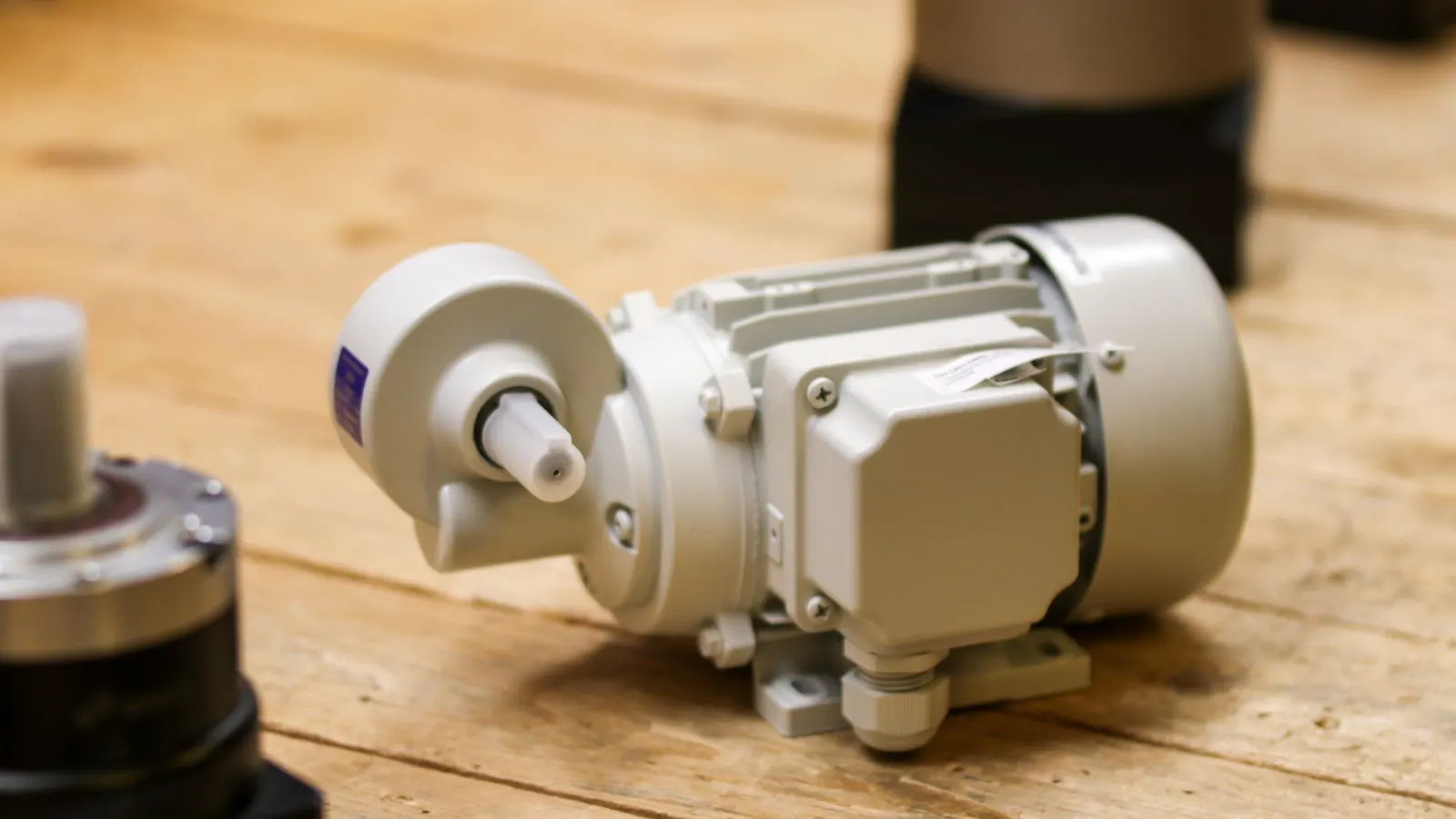
Gearmotor drives use a motor connected to a reduction gear. They deliver high torque at low speed and handle heavy loads well. The trade-off is bulk. The gear unit adds weight and takes floor space. If your site has tight clearances, a compact gearmotor may not fit.
Chain drives use sprockets and a chain to transfer power to a drive pulley or sprocket on the conveyor. They are durable and handle shock loads better than belt drives. Maintenance is more frequent. Chain tension and lubrication must be checked regularly, especially in dirty environments.
Belt drives use a motor pulley connected to a driven pulley by a V-belt or timing belt. They are quieter and cleaner than chain drives. The belt can slip if tension drops, which causes loss of power transfer. For high-speed applications, timing belts hold position better than V-belts.
Direct drive motors mount the motor directly to the drive shaft. They eliminate intermediate components and reduce failure points. The trade-off is that the motor must produce the required torque at the conveyor speed, which often means a larger, more expensive motor.
Variable frequency drives (VFDs) are not a mechanical drive type but a control method applied to the motor. They allow the conveyor to ramp up, slow down, and reverse without mechanical gear changes. A supplier who integrates VFD control can reduce motor stress during startup and allow production to adjust speed without stopping.
No single drive wins in every case. A food processing line may need a belt drive for sanitation ease. A mining site may need a chain drive to survive abrasive load. The right choice depends on your process, not on what sounds impressive in a spec sheet.
How to Evaluate a Conveyor Manufacturer’s Technical Capability
A supplier that can explain the physics of your drive selection will save you problems later. When reviewing a conveyor manufacturer, ask for their standard engineering documents. A credible supplier will provide torque calculations, load charts, and maintenance schedules as part of the proposal.
Check the depth of their technical team. A small distributor may pass your project to a design firm without direct involvement. That adds communication layers and slows change orders. A manufacturer with in-house engineers can answer torque questions, confirm bearing sizes, and adjust the drive layout on the drawing.
Ask about their testing process. Do they perform load testing on prototypes? Do they run the conveyor at rated speed for a defined period before shipment? If they cannot describe their test protocol, ask for references from similar installations. A supplier who has shipped a similar drive to a customer in the same industry will have encountered the same issues.
Review their component sourcing. Major drive components come from a few global suppliers. A conveyor manufacturer that sources from these suppliers has access to standard parts and can replace a motor or bearing quickly. A supplier that uses obscure or custom components may face long lead times when a part fails.
Maintenance and Spare Parts Considerations
The drive system will need attention. The question is how much, and whether your team can handle it.
Gearmotor drives require oil level checks and occasional bearing replacement. Sealed units need less attention but are harder to repair in the field. If the seal leaks, a full housing replacement may be needed.
Chain drives need tension adjustment, lubrication, and link inspection. In wet or dusty environments, chain wear accelerates. A supplier who specifies a chain material suited to your environment will extend service life.
Belt drives need tension checks and belt replacement. Timing belts are more expensive but last longer and hold alignment. V-belts are cheaper and easier to source but stretch over time.
Direct drives have the fewest moving parts to service. The motor itself is the main maintenance item. If the motor has a bearing failure, you need a matching replacement or a rebuild service.
Ask the supplier for a maintenance schedule in writing. Include intervals, required tools, and safety procedures. Ask what spare parts they recommend keeping on site. A good supplier will tell you which components wear first and what the typical service life is.
The cost of maintenance is part of the total cost of ownership. A cheaper drive that fails every six months will cost more than a slightly more expensive drive that runs for three years.
Safety and Compliance Requirements
The drive system must meet the safety standards of your region and industry. Electrical motors need proper grounding, insulation ratings, and protection against the ambient environment. Mechanical drives need guarding that prevents contact with moving parts during normal operation.
A conveyor manufacturer should provide safety documentation with the system. This includes electrical diagrams, guard specifications, and emergency stop integration points. If your site has a lockout tagout program, the drive system must support it. The supplier should confirm that the motor and drive components can be isolated safely.
Check the ambient conditions. If the drive is near a chemical process, the motor enclosure must be rated for that environment. If the drive is outdoors, the enclosure must resist rain, UV, and temperature swings. A supplier who ignores these conditions will quote a standard motor that fails within a year.
Ask for the certification documents. Electrical motors carry certifications from recognized testing bodies. The supplier should be able to provide the certificate that matches the specific motor model you are buying. If they cannot, ask why.
Cost Comparison Beyond the Initial Quote
The initial price is the smallest part of the decision. A cheaper drive quote may hide higher integration costs, longer installation time, or increased energy use.
Ask the supplier to break down the price. The drive unit cost is one item. Installation labor is another. Electrical work, guarding, and foundation prep are separate. If the supplier bundles everything into one number, ask for a line-item quote.
Compare energy consumption. A motor with a high service factor may cost more upfront but run cooler and last longer. A motor sized just to the minimum load will run hot and wear faster. The supplier should size the motor with a margin for peak load.
Consider the cost of downtime. If the drive is on a critical line, a failure stops production. A supplier who offers a spare drive or a rapid replacement service reduces that risk. Ask what their response time is for a failed component. Some suppliers can ship a replacement within a day. Others may take two weeks.
The total cost includes installation, energy, maintenance, spare parts, and downtime. Build a simple spreadsheet with these categories and compare each supplier against it. The lowest initial price often loses when the other costs are added.
Questions to Ask Before You Sign
Use this list when reviewing a conveyor manufacturer proposal. The answers will tell you more than the brochure.
- What torque and speed calculations are included in your proposal?
- What components are you sourcing from, and do you have standard replacement parts available?
- What is your recommended maintenance interval for the drive system?
- Can you provide a load test report from a similar installation?
- What safety documentation will you provide with the system?
- What is your response time if a drive component fails during normal operation?
- Can you support variable speed operation if we need it later?
- What warranty terms apply to the motor, gear unit, and drive components?
A good supplier will answer each question directly. They will not deflect to a sales team or give vague answers. If they cannot provide a specific number or document, ask for a timeline for when they can.
Decision Checklist
Run through this checklist before you select a conveyor manufacturer. Each item should be verified against the supplier’s written response.
- The drive type matches the load weight, speed, and environmental conditions.
- The supplier provided torque calculations and load charts.
- The maintenance schedule is written and includes required tools.
- The supplier can source standard replacement parts within an acceptable lead time.
- Safety documentation and electrical diagrams are included.
- The warranty terms cover the motor, gear unit, and drive components.
- The total cost of ownership, not just the initial price, was compared.
- References from similar installations are available and verified.
- The supplier confirmed they can support future speed changes or load increases.
- The installation plan includes foundation, guarding, and electrical integration.
If the supplier fails on any of these items, ask why. A credible supplier will address the gap or explain the limitation. If they cannot, move to the next option. The right supplier will make the process clear and the risk manageable.
Frequently asked questions
What drive type handles the heaviest loads?
Chain drives and gearmotor drives are the standard choices for heavy loads. Chain drives handle shock loads well, while gearmotors provide high torque at low speed. The final choice depends on your speed requirements and space constraints.
How do I know if a supplier is a true conveyor manufacturer?
Check whether they provide engineering documents, torque calculations, and maintenance schedules. A true manufacturer designs the system for your application. A distributor may resell a standard unit without providing that level of technical support.
Is a variable frequency drive worth adding to a conveyor system?
A VFD is worth adding if you need variable speed, reduced startup stress, or precise control. It adds cost but reduces motor wear and allows production to adjust without stopping. For fixed-speed lines, it may not be justified.
What is the typical service life of a conveyor drive?
Service life depends on load, environment, and maintenance. A well-maintained gearmotor or belt drive can last many years. A chain drive in a dusty environment may need replacement sooner. Ask the supplier for their typical service life based on similar applications.
Can I change the drive system after installation?
Yes, but it requires planning. Changing from a gearmotor to a direct drive may change the motor size, mounting, and electrical load. A supplier who designs the system for future changes can make this easier. Plan for this at the design stage.