An easy clean belt conveyor system is generally easier to clean than a chain conveyor due to fewer crevices and smoother surfaces. Modular belts offer flat, welded sections for food contact, while chains suit heavy loads but require more disassembly for sanitation.
- Modular belts provide a flat, continuous surface that reduces trapped food residue and speeds up washdown.
- Chain conveyors expose links, rollers, and plates where debris and bacteria can accumulate in hard-to-reach gaps.
- Choose a modular belt for wet, sticky, or high-sanitation lines where cleaning time and inspection matter.
- Use a chain conveyor when structural strength and load capacity outweigh the need for frequent sanitation.
- The best system depends on product type, wash frequency, and available maintenance windows.
Which system wins on cleaning speed
Food, beverage, pharmaceutical, and chemical manufacturers often face a direct trade-off between structural strength and sanitation. A chain conveyor is built for load and durability. A modular belt conveyor is built for surface continuity and easy access. When cleaning speed and hygiene are the primary concerns, the modular belt usually comes out ahead.
The difference comes down to surface area and access. A chain system has links, pins, rollers, plates, and gaps. Food particles, liquid, and powder can settle into these small pockets. During washdown, water may reach the top surface, but residue in the gaps remains. A modular belt consists of flat, welded sections that form a smooth, continuous plane. There are no links to trap material. Water and detergent run across the surface and drain away. This makes the cleaning cycle shorter and more predictable.
Cleaning speed is not just about water flow. It is about inspection. With a modular belt, a worker can run a gloved hand across the surface and check for residue. With a chain, a visual check is difficult because the links and rollers obscure the full picture. In a food plant, that difference can mean the difference between a quick pass and a full disassembly.
What makes a chain conveyor harder to clean
A chain conveyor is a mechanical system. It uses links, rollers, and often plates to carry the load. Each link has a pin and a gap. Each roller has a bearing and a housing. These components are designed to handle force, not to shed residue. In a dry, low-moisture environment, this is not a problem. In a wet or sticky environment, it becomes a significant one.
The chain itself is the main issue. The links are metal or plastic, and the gaps between them are small. A small amount of flour, sugar, or liquid can get into these gaps and dry. Once dried, the residue is difficult to remove. It may require a brush, a solvent, or a full disassembly. In a pharmaceutical line, this is a major concern. Residue in a gap is a potential cross-contamination risk.
Rollers and plates add to the problem. Rollers have bearings that can trap debris. Plates have edges and seams where material can catch. If the chain uses a flat plate or a custom profile, the cleaning challenge increases. The plates may have fasteners, welds, or rivets. These features create small cavities that hold residue. A modular belt avoids most of these features by design. The belt is a single, continuous surface with no fasteners, no welds, and no rollers to trap material.
How a modular belt simplifies sanitation
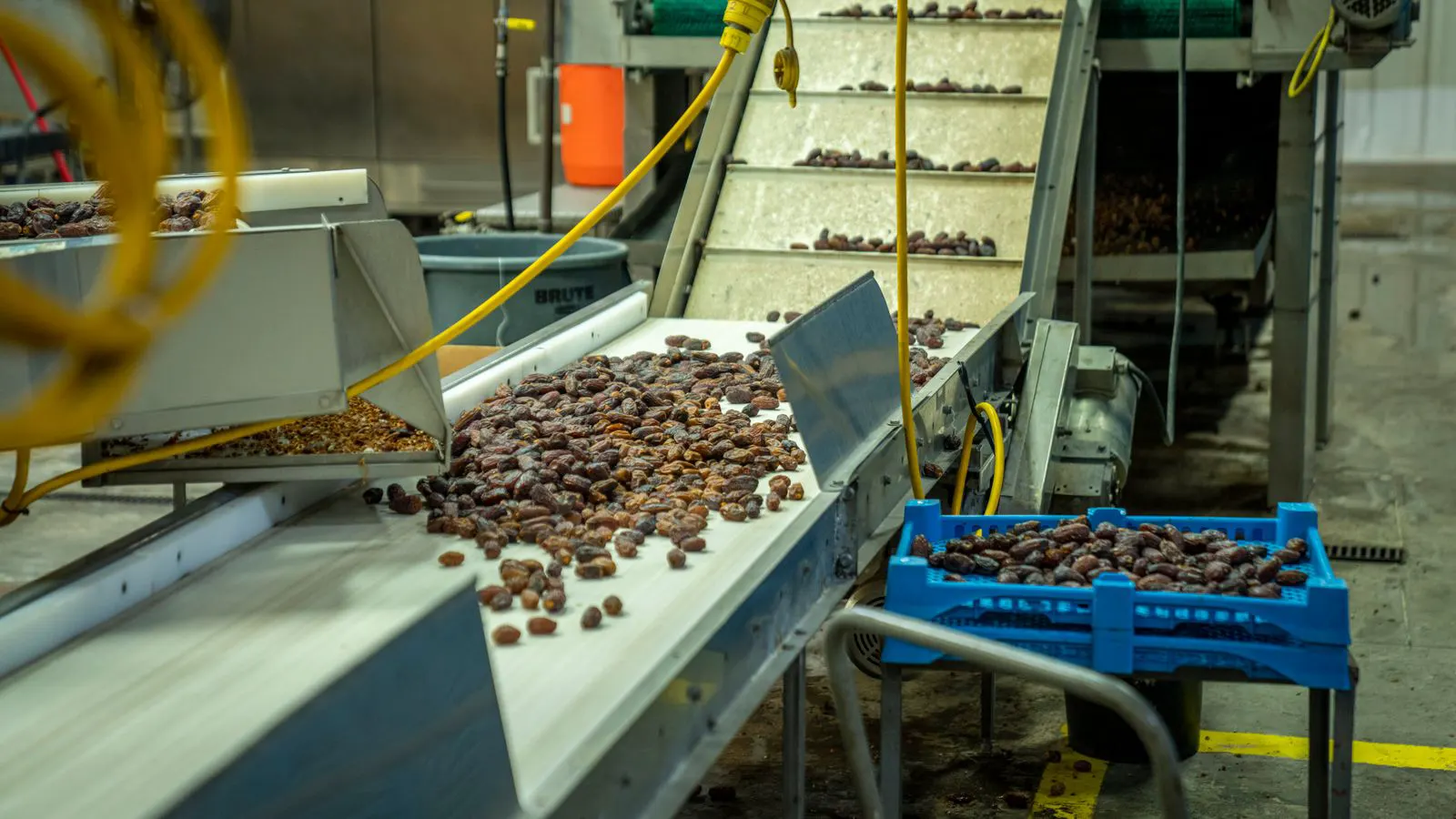
A modular belt conveyor is a system of flat, flexible sections that interlock to form a continuous belt. Each section is typically made of a material that can be cleaned. In food service, the belt may be made of a food-grade material that is easy to sanitize. The surface is smooth and flat. There are no links, no pins, and no gaps. This design is ideal for wet, sticky, or high-sanitation lines.
The cleaning process is straightforward. Water and detergent are applied to the belt. The belt moves, and the residue is washed away. The belt may have a slight texture to grip the product, but the texture is shallow and easy to clean. The belt is supported by a frame and rollers, but the rollers are not in direct contact with the product. This means the rollers do not need to be cleaned as frequently as they would in a chain system.
The modular belt also allows for easier inspection. The surface is open and visible. A worker can see the entire belt at once. If there is residue, it is visible. There are no hidden gaps or links. This makes the inspection process faster and more reliable. In a food plant, this is a major advantage. A quick inspection can catch a residue problem before it becomes a sanitation issue.
Comparison table
| Option | Best for | Limitations |
|---|---|---|
| Chain conveyor | Heavy loads, high structural strength, dry or low-moisture environments | More gaps and crevices, harder to clean, requires more disassembly for sanitation |
| Modular belt conveyor | Food, beverage, pharma, wet or sticky products, high-sanitation lines | Lower load capacity than chain, may require more frequent belt replacement, not ideal for extreme heat or abrasion |
| Custom chain with smooth plates | Heavy loads that require some cleaning ease | Still has links and gaps, plates may trap residue, cleaning time is longer than modular belt |
| Modular belt with textured surface | Products that need grip but also require cleaning | Texture can trap residue if not designed for easy cleaning, may require more frequent cleaning cycles |
| Chain conveyor with removable plates | Lines that need occasional deep cleaning | Plates must be removed for cleaning, which adds time and labor, not ideal for high-frequency washdown |
When to pick a chain conveyor
A chain conveyor is the right choice when structural strength is the priority. If the line carries heavy, dense, or abrasive materials, a chain system may be the only option. The load capacity of a chain conveyor is generally higher than that of a modular belt. The links and plates are designed to handle force without deforming. This makes the chain conveyor suitable for industrial, heavy-duty applications.
In a dry, low-moisture environment, the cleaning challenge is minimal. If the product is dry and does not stick, the chain can be cleaned with a brush or a compressed air blow. The gaps do not trap residue. The links and rollers can be inspected visually. This makes the chain conveyor a good fit for lines that do not require frequent sanitation.
A chain conveyor is also a good choice when the line is not subject to frequent washdown. If the cleaning cycle is infrequent, the time and labor required for a chain cleaning may be acceptable. The chain is a durable system that can handle heavy loads and rough conditions. It is a proven, reliable option for many industrial applications.
When to pick a modular belt
A modular belt conveyor is the right choice when cleaning ease and hygiene are the priority. If the line carries food, beverage, pharmaceutical, or chemical products, the modular belt is often the better option. The flat, continuous surface is easy to clean and inspect. The gaps and crevices of a chain system are avoided. This reduces the risk of residue and cross-contamination.
In a wet or sticky environment, the modular belt is a clear advantage. Water and liquid run across the surface and drain away. There are no gaps to trap liquid. The belt is easy to sanitize. This makes the modular belt ideal for lines that require frequent washdown. The cleaning cycle is shorter and more predictable.
A modular belt is also a good choice when the line requires high-speed operation. The belt is smooth and continuous, which allows for high-speed movement without vibration or noise. The chain system can be noisier and more prone to vibration, which can affect product integrity. The modular belt offers a smoother, quieter operation that is better suited for sensitive products.
Practical cleaning considerations
The cleaning process depends on the product and the environment. In a food plant, the cleaning process may involve water, detergent, and sanitizer. The belt must be able to withstand these chemicals. The modular belt is often made of a material that is resistant to water and detergent. The chain may be made of metal or plastic, which can be affected by certain chemicals.
The frequency of cleaning is also important. If the line runs continuously and requires frequent washdown, the modular belt is a better fit. The cleaning cycle is shorter and more reliable. If the line runs intermittently and requires infrequent cleaning, the chain conveyor may be sufficient. The cleaning time for a chain system may be acceptable if the cycle is infrequent.
The available maintenance windows are also a factor. If the maintenance window is short, the modular belt is a better fit. The cleaning cycle is shorter and requires less labor. If the maintenance window is long, the chain conveyor may be acceptable. The cleaning time for a chain system may fit within a longer maintenance window.
Final guidance
The choice between a chain conveyor and a modular belt conveyor depends on the application. If the priority is structural strength and load capacity, the chain conveyor is the better option. If the priority is cleaning ease and hygiene, the modular belt is the better option. The best system is the one that fits the product, the environment, and the cleaning requirements.
An easy clean belt conveyor system is the standard for food, beverage, pharmaceutical, and chemical lines. The modular belt offers a flat, continuous surface that is easy to clean and inspect. The chain conveyor offers structural strength and load capacity but requires more effort to clean. The decision is not one-size-fits-all. It depends on the specific needs of the line. Evaluate the product, the environment, and the cleaning requirements before making a choice.
The modular belt is the default for high-sanitation lines. The chain conveyor is the default for heavy-duty lines. If the line requires both strength and cleaning ease, a custom solution may be needed. A chain conveyor with smooth, removable plates may be a compromise. A modular belt with a reinforced surface may be a compromise. The best solution is the one that meets the requirements without over-engineering.
Frequently asked questions
Is a modular belt always easier to clean than a chain conveyor?
Yes, in most wet or sticky environments. The flat, continuous surface of a modular belt reduces gaps and crevices, which makes cleaning faster and more effective.
Can a chain conveyor be cleaned easily if it uses smooth plates?
It can be easier to clean, but it is still harder than a modular belt. The links and gaps remain, and the plates may trap residue. Cleaning still requires more effort.
What materials are used for modular belts in food lines?
Food-grade materials are used, such as rubber or plastic, that are resistant to water and detergent. The material must be easy to clean and safe for food contact.
How often does a modular belt need to be replaced?
It depends on the load and the environment. In high-sanitation lines, the belt may need to be replaced more frequently due to cleaning chemicals. In dry lines, it may last longer.
Is a chain conveyor suitable for pharmaceutical lines?
It can be, but it requires careful cleaning. The gaps and crevices must be inspected and cleaned thoroughly to avoid cross-contamination. A modular belt is often preferred for pharma lines.